
Self-Control Without Shame
Jul 27, 2026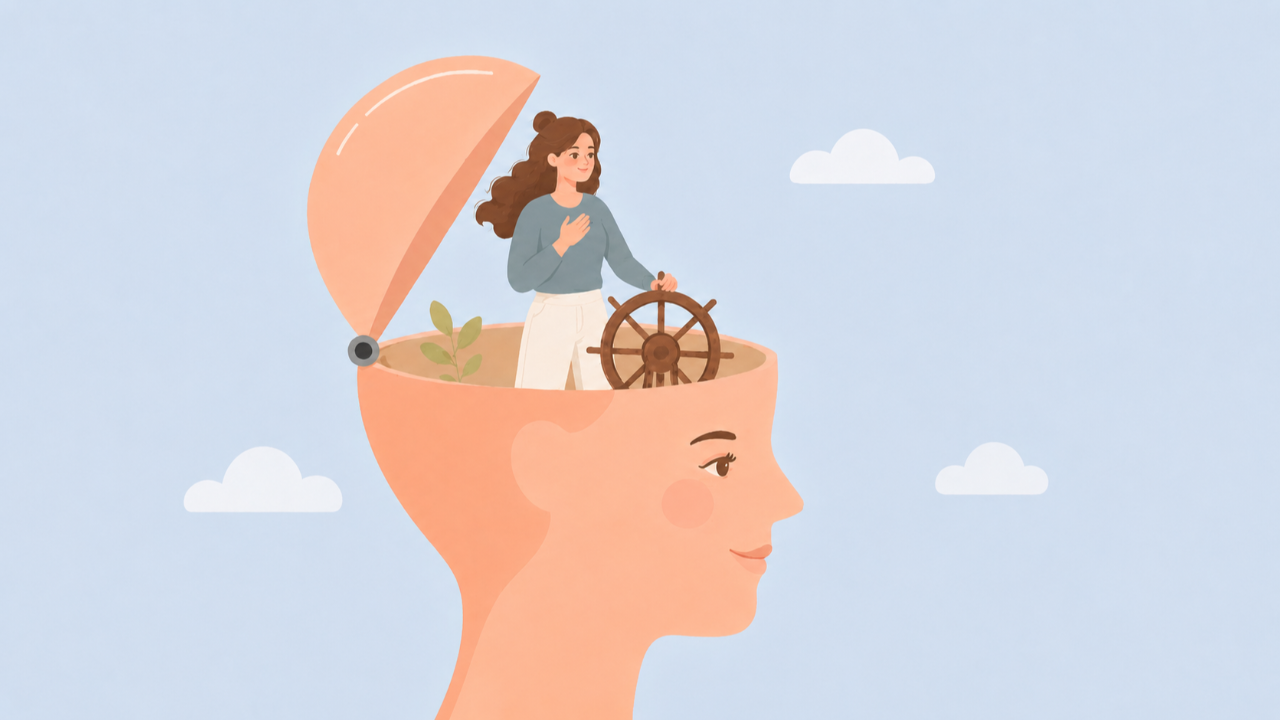
We are more than halfway through the year, which makes this a pretty good time to pause and look back at some of the things we wanted for ourselves when January began.
Maybe you had a health goal. Maybe you wanted to get stronger, change careers, finish something you started, create better habits, or finally make a change you've been thinking about for years. Some of those intentions may be well underway. Others may have quietly slipped further and further into the background.
I know that pattern because I've lived it. I've wanted something deeply, started with all kinds of enthusiasm, and eventually found myself back in familiar habits wondering, "Why can't I just make myself do this?"
For a long time, I thought the answer was more willpower. Push harder. Try harder. Be more disciplined. Today I see it very differently.
What if lasting self-control isn't about forcing yourself into submission? What if it's actually about becoming connected enough to yourself so that you can consciously choose what you truly want?
This week on the Be a Blaze Podcast, we're talking about the difference between willpower and self-control, why familiar patterns can overpower even our best intentions, and how planning ahead can help us make choices from connection rather than impulse.
🎧 Listen to podcast Episode 54: Harnessing Self-Control - The Key to Real Change
Willpower and Self-Control Are Not the Same Thing
Willpower often feels like a fight.
There's a lot of gritting your teeth, trying to be "good," and hoping you can hold everything together long enough to reach the goal. Underneath it can be this constant warning: Don't mess this up again.
That's exhausting.
And when we eventually return to an old behavior, it can reinforce the very shame we were trying to escape. We decide we weren't disciplined enough, strong enough, or committed enough.
I don't believe that's what healthy self-control looks like.
Self-control, to me, comes from awareness and connection. In Scripture, self-control is named among the fruits of the Spirit. I love thinking about it that way because fruit isn't something you beat out of a tree. It grows as something becomes healthy, rooted, nourished, and connected.
Self-control can grow in us the same way. It doesn't mean there won't be effort. It means the effort comes from a different place.
Look at the Pattern Without Attacking Yourself
One of the most powerful things you can learn to do is observe yourself honestly without immediately turning what you see into an indictment of who you are.
Maybe you notice that every time you become overwhelmed, you reach for food. Maybe you make commitments to yourself and then abandon them when life gets busy. Maybe you can follow a plan perfectly for three weeks, but the minute something interrupts your routine, everything seems to unravel.
That is information.
Instead of saying, "What is wrong with me?" try becoming curious about what is happening.
What does this behavior give me? What happens immediately before I do it? What emotion am I experiencing? What am I hoping this choice will change for me in the moment?
We cannot consciously change patterns we refuse to look at. And we don't need cruelty to see clearly.
Sometimes the Behavior Is Carrying a Meaning
One reason change can be so difficult is that the thing we're trying to give up may represent far more than the thing itself.
Food can represent celebration, comfort, belonging, reward, or love. Alcohol can represent relaxation or social connection. Spending might represent freedom. Staying busy might help us avoid something we don't want to feel.
That is why simply removing the behavior doesn't always change the pattern. We have to become interested in what we've attached to it.
When you understand what you're really reaching for, you have an opportunity to meet that need differently instead of endlessly fighting the symptom.
This is part of why I believe our mental, emotional, physical, and spiritual health cannot be separated. We are whole people. If we're trying to create physical change while completely ignoring what's happening emotionally, we're leaving out an enormous part of ourselves.
Know What You're Moving Toward
It's easy to know what you don't want.
I don't want to feel tired anymore. I don't want to keep gaining weight. I don't want to live stressed out. I don't want to keep repeating this pattern.
But what do you want? That question matters.
Maybe you want the strength to travel without worrying about whether your body can keep up. You want to play with your children or grandchildren. You want more energy when you wake up. You want a relationship with food that feels peaceful instead of obsessive. You want to trust yourself when you make a commitment.
When your goal becomes connected to the life you're creating rather than simply the thing you're trying to escape, your choices begin to carry different meaning.
You aren't just saying no to something. You're saying yes to something you value more.
Make the Decision Before the Decision
This is where planning becomes incredibly powerful.
Most of us already know many of the situations where our old patterns tend to show up. The restaurant. The family gathering. The stressful workday. The vacation. The evening when we're exhausted and don't want to think about anything anymore. You don't have to wait until you're standing in the middle of that moment to decide who you want to be. You can decide ahead of time.
Ask yourself: If this happens, what do I want to choose?
You're not trying to predict every possible scenario. You're giving your conscious mind an opportunity to participate before an old automatic pattern takes over.
And then something really interesting happens. The next time you encounter that situation, you aren't starting from zero. You've already considered what matters to you. That's very different from white-knuckling your way through temptation.
Self-Control Is Still Choice
I also don't believe self-control means never choosing the cake, the fried okra, the vacation meal, the day off, or whatever the thing might be for you. Sometimes you may consciously choose it. The difference is whether you are choosing it or whether the pattern is choosing for you.
There is enormous freedom in being able to say, "I know what I'm choosing, and I understand what may come with that choice."
You may discover that something you used to want doesn't feel worth the way you feel afterward. Or you may choose it, enjoy it, learn something, and move forward without turning the experience into shame. Either way, you're paying attention. That awareness is where change begins to become sustainable.
Partner With Yourself Instead of Punishing Yourself
For years, many of us have approached our bodies and our lives as problems that need to be corrected.
What if you stopped fighting yourself?
What if, instead, you began to see yourself as someone you're responsible for caring for?
That changes the conversation. Self-control stops sounding like, "You can't have that because you're bad." It becomes, "I care about myself enough to choose what supports where I'm going." That is a completely different energy. You're not withholding something from yourself. You're participating in your own health, healing, growth, and future. And each time you make a conscious choice, you build a little more trust with yourself.
You Can Practice a New Normal
Changing an old pattern will feel unfamiliar at first. That's part of change. There may be moments when the old thing sounds really good. There may be moments when your brain presents an absolutely fantastic argument for why this should be the exception. You can notice all of that without obeying it.
You can get curious. You can pause. You can remember what you decided before you walked into the moment.
And then you can choose. Over time, those choices begin to create something new. What once required enormous attention starts becoming more familiar. You learn what it feels like to live from a more connected place.
Self-control isn't your punishment. It's your ally. It's one of the ways you stop handing your life back to the patterns that have already shown you where they lead.
So take another look at whatever you wanted for yourself this year. Maybe you haven't failed. Maybe the goal isn't something you need to set aside again. Maybe you simply need a different way of getting there.
Not more shame.
Not more force.
More awareness. More connection. More compassion. And choices made on purpose.